AI
AI Agents in Logistics: Who Owns the Decision When the Agent Acts?


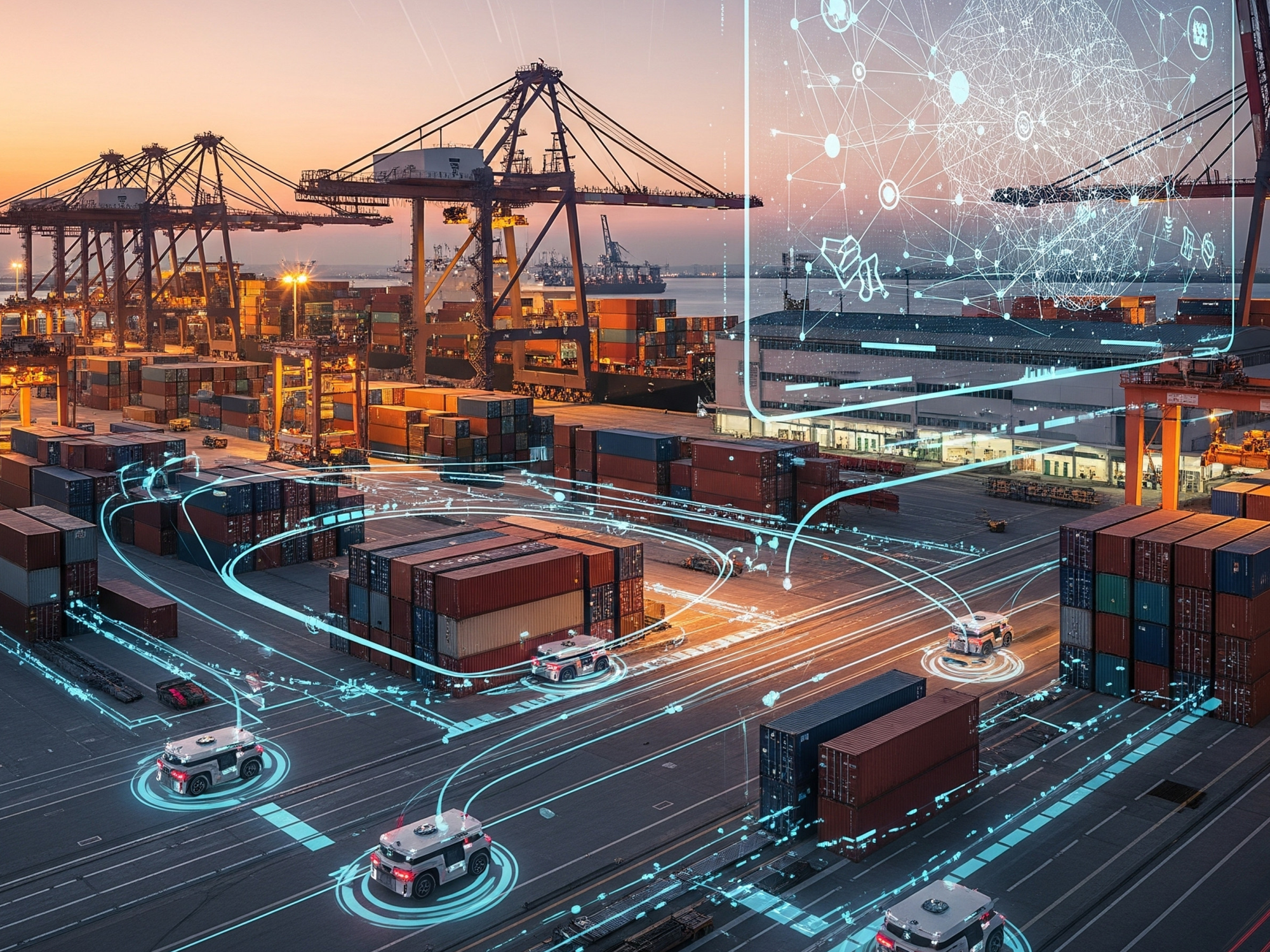
AI in logistics is entering a new phase. For some time, companies used AI mainly to analyze data, improve forecasts, calculate ETAs, or support planning teams with recommendations. Now, the role of AI is changing. AI agents are starting to act inside operational workflows. They monitor events, detect exceptions, trigger updates, prioritize tasks, support documentation, and in some cases execute decisions without waiting for manual approval at every step.
This is not a distant scenario. Logistics operations are already becoming more automated because the environment around them has become too volatile, too expensive, and too fast-moving for purely manual control. In 2026, supply chain volatility is no longer treated as a temporary disruption. It is becoming the operating context itself. U.S. business logistics costs reached $2.4 trillion, equal to 7.8% of GDP, which shows how much money is tied to the quality of operational decisions.
At the same time, logistics is no longer viewed only as a support function. A 2026 global outlook, based on survey responses from 3,500 supply chain and logistics executives, found that modern logistics is increasingly seen as a strategic enabler of growth and competitive advantage. This changes the role of technology. AI is not being introduced only to reduce manual work. It is being introduced to help companies make faster, more consistent, and more scalable operational and strategic decisions across complex networks.
But once AI moves from analysis to action, a more difficult question emerges. If an AI agent acts, who owns the decision?
AI can act, but it cannot be accountable
In a recent ElifTech discussion, Wolfgang Lehmacher, a global expert in supply chain and logistics, made the point clearly: AI owns no decision. Only people and institutions do.
This distinction is critical. An AI system can recommend a route, trigger a shipment update, draft a document, prioritize an exception, or suggest a workflow. But it cannot carry legal, operational, commercial, or ethical responsibility. Accountability remains with the people who define what the system optimizes for, where it is deployed, what data it uses, which actions it can execute, and when a human must intervene.
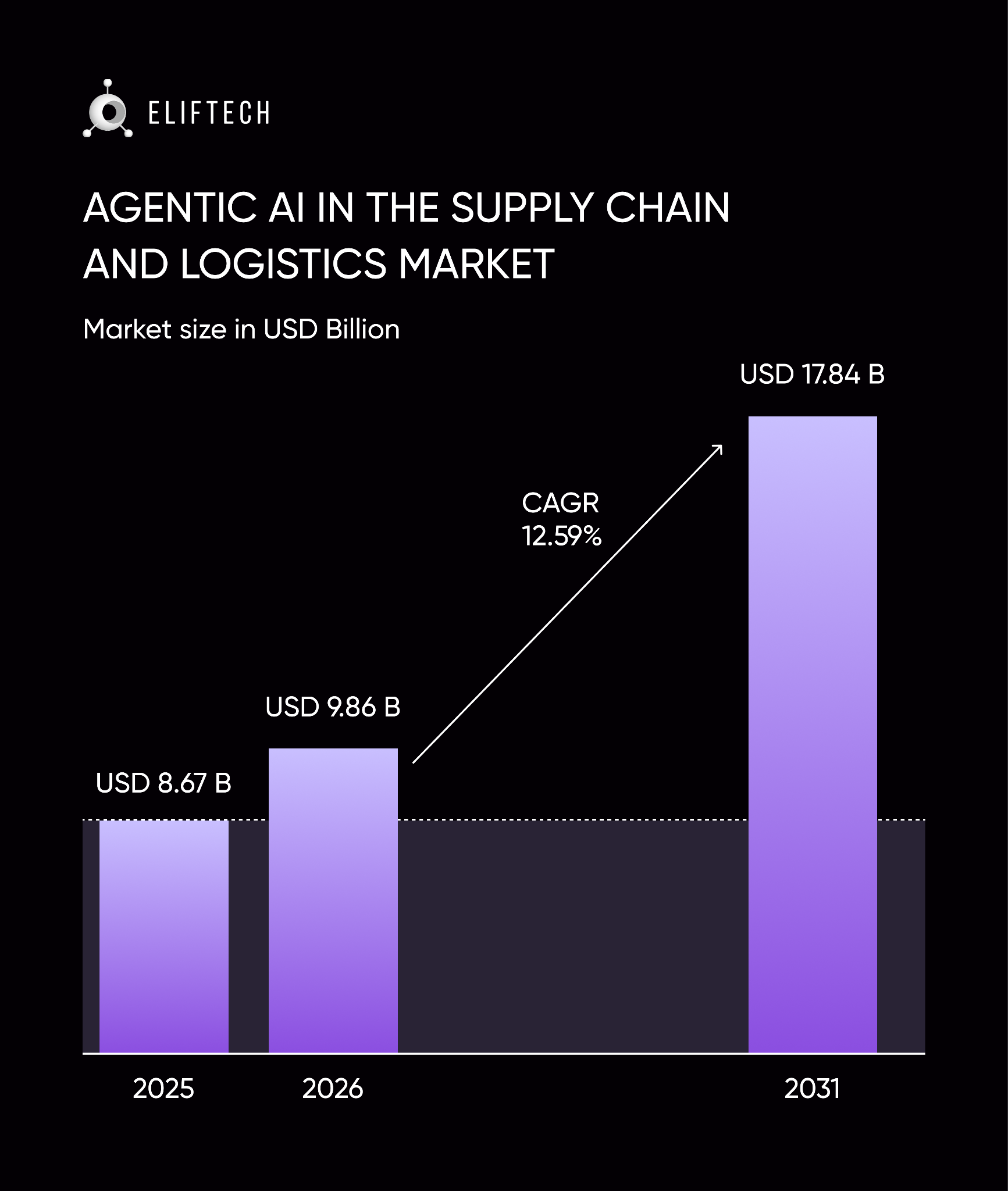
This matters because adoption is moving quickly. In the agentic AI supply chain and logistics market, software platforms captured 57.81% of 2025 revenue. Last-mile delivery orchestration is expected to be the fastest-growing application area from 2026 to 2031, with a projected CAGR of 13.79%. So, more logistics workflows will include AI systems that not only show information but also help move work forward.
The risk is that companies may automate actions faster than they define ownership. That is where AI stops being a productivity tool and starts becoming an accountability problem.
The real risk is unclear ownership
In traditional logistics operations, responsibility is usually easier to trace. A manager approves a decision. A planner changes a route. A warehouse team prioritizes a task. A customs specialist reviews a document. When something goes wrong, the organization can investigate the process and identify the decision owner.
AI agents complicate this chain. A system reprioritizes a shipment based on a rule. It escalates one customer case and not another. It generates a document that still needs review but already shapes the next operational step. It recommends a carrier, adjusts a route, or triggers a customer notification based on patterns that are not always obvious to the people affected by the outcome.
This creates a responsibility gap. Operations says the system made the decision. Technology teams say the business configured the rules. Business leaders say the model behaved unexpectedly. Partners say they only provided data or infrastructure. In the end, everyone explains their part, but no one clearly owns the outcome.
From a logistics perspective, this is especially dangerous because decisions rarely remain within a single department. One AI-triggered action can affect transport planning, warehouse execution, customer communication, compliance, finance, and partner relationships. When the operating model is fragmented, AI does not remove fragmentation. It can accelerate it.
This is why governance must be designed before autonomy scales.
Governance should move at machine speed
Good AI governance in logistics is not a policy document that sits outside the operation. It has to be built into the workflow itself. Wolfgang Lehmacher described governance in the age of AI agents as a living control system. Machines can be fast, but they are never free.
1. The first step is to map the decisions AI touches. A company needs to know where AI is only analyzing data, where it is recommending actions, where it is triggering workflows, and where it is allowed to execute decisions. These categories should not be treated equally. A delivery update, a customs document draft, a route change, and a high-value shipment prioritization carry different levels of risk.
2. The second step is to classify authority. Some AI actions can be automated within clear limits. Some should require human approval. Some should only be advisory. The point is not to slow the system down. The point is to prevent automation from becoming invisible.
3. The third step is to create traceability. If an AI-supported decision affects cost, service, compliance, safety, or customer trust, the company should be able to reconstruct what happened. What data was used? Which rule or model output influenced the action? Was there a threshold? Was a human involved? What happened after execution?
Regulation is also moving in this direction. The EU AI Act entered into force in August 2024 and is being applied in stages. General provisions, definitions, AI literacy requirements, and prohibited AI practices went into force in February 2025. Rules for general-purpose AI in August 2025, and broader requirements continue to be phased in through 2026 and beyond.
AI governance is becoming part of operational readiness.
AI ownership is a leadership decision
Many companies still treat AI implementation as a technology project. That is an insufficient starting point. AI agents affect service levels, customer promises, compliance exposure, partner relationships, cost structures, and employee roles. These are leadership questions, not only technical ones.
Before scaling AI agents, logistics CEOs and operational leaders need to answer three questions.
- Who owns AI risk inside the organization?
- Where may AI only advise, and where may it execute?
- What governance standards are required from partners, vendors, and connected systems?
These questions should be answered before AI agents are connected to high-impact workflows. Once automation is active, ownership gaps become harder to fix. By then, the system may already be shaping decisions across teams, sites, and partners.
This is also where ElifTech sees the practical value of responsible AI implementation. The goal is not to build isolated AI features that simply make operations look more advanced. The value lies in designing connected decision layers: systems that unify data, clarify signals, support accountable workflows, and help teams move from visibility to action.
In logistics, this can mean AI-assisted document processing, control tower integration, exception management, compliance automation, route intelligence, anomaly detection, or customer communication workflows. But the technology creates real business value only when it operates inside clear decision boundaries.
A dashboard does not solve unclear ownership. A model does not solve weak escalation. An AI agent does not solve fragmented governance.
The future of logistics is accountable
AI agents will become the new normal in logistics. The pressure is real. Networks are more complex. Customer expectations are higher. Disruptions are more frequent. Margins remain slim. Manual coordination cannot scale at the same speed as operational complexity.
But autonomy without accountability is operational debt.
The companies that benefit most from AI will not be the ones that automate the fastest. They will be the ones defining ownership before automation reaches critical decisions. They will know which outcomes they are protecting, who owns the risk, where humans remain in control, and how every important action can be traced.
AI can help logistics companies move faster. But only governance can make that speed safe.
When an AI agent acts, the system may execute the workflow. But the decision still belongs to the people and the organization.
