AI
The Hidden Cost of Incorrect Parcel Dimensions: How Smartphone-Based 3D Scanning and Software Integration Improve Logistics Accuracy


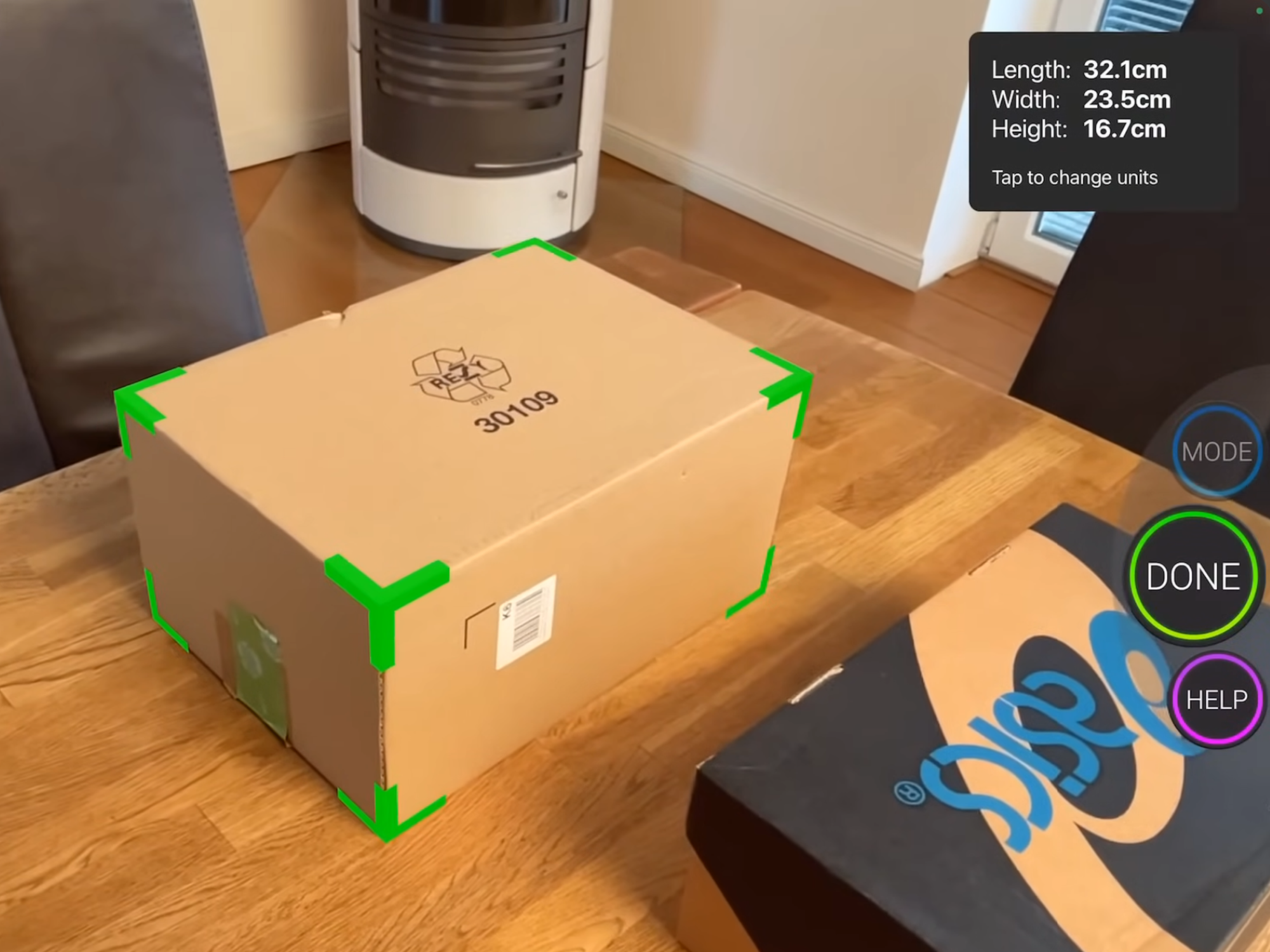
Parcel dimensions look like a small operational detail. A minor measurement deviation, a rounded dimension, or a manual entry error can quickly distort the accuracy of parcel data across the entire logistics workflow. In a single shipment, this might seem like something you can overlook. But logistics doesn’t operate on a single shipment. It operates in thousands, hundreds of thousands, and sometimes millions of parcels moving through warehouses, fulfillment centers, hubs, vehicles, billing systems, and customer-facing workflows.
At that scale, small data inaccuracies become expensive. They affect how companies price parcels, plane space, and load trailers. In modern parcel operations, dimensional accuracy is not only about a warehouse measurement. It is a revenue, planning, and data quality.
The logistics industry is increasingly focusing on parcel dimensions amid rising shipment volumes and greater automation. Reliable dimensional data helps logistics companies calculate shipping costs and control the parcel process effectively.
Why parcel dimensions matter more
Parcel dimensions influence one of the most sensitive areas in logistics: chargeable weight. In parcel and freight operations, the cost of a shipment is often not based only on actual weight. Carriers and logistics operators also consider the space the parcel occupies. If a lightweight parcel takes up a large amount of cubic space, the dimensional or volumetric weight may become the billable basis. Chargeable weight depends on both actual weight and dimensional calculations, with the higher of the two typically used for billing.
That means inaccurate dimensions can directly affect revenue. If the parcel is measured too small, the company may underbill. If it is measured too large, the customer may be overcharged, which can trigger disputes, rebilling, and loss of trust.
But billing is only one layer. Dimensional data also affects:
- load planning,
- trailer utilization,
- warehouse slotting,
- customer pricing,
- invoicing,
- reporting.
A WMS may use parcel size to decide where items should be stored or staged. A TMS may use the same data to plan capacity and calculate shipment costs. ERP and invoicing systems may rely on it to generate financial records. BI dashboards may use it to analyze margin, density, throughput, and cost per shipment.
When the source data is wrong, every downstream workflow becomes less reliable.
The hidden cost of incorrect dimensions
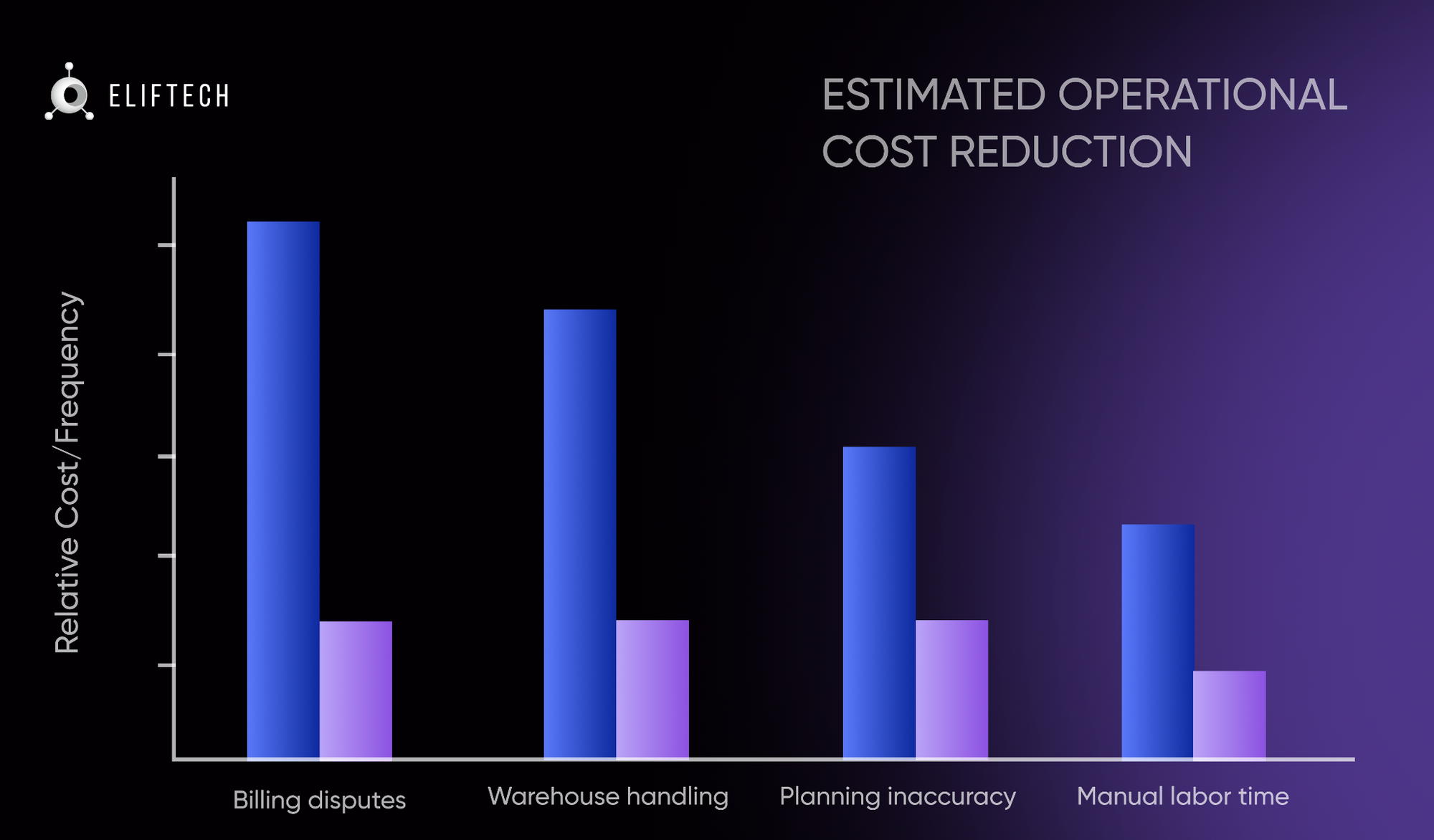
The most obvious cost of incorrect dimensions is billing inaccuracy. Underbilling creates revenue leakage. Overbilling creates customer friction. Both are damaging, but the hidden cost often lies in the operational work required to address the error.
A parcel with questionable dimensions may require manual verification. A customer dispute may require an operations team to investigate the shipment, check the original measurement, compare it with the invoice, review the pricing logic, and issue a correction. A warehouse team may need to re-measure parcels during peak intake. A finance team may need to rebill. A customer success team may need to explain the discrepancy.
None of this work moves the parcel faster. None of it improves service quality. It is corrective labor created by poor data.
Incorrect dimensions also reduce planning quality. If parcel volume is underestimated, a trailer may look available in the system but run out of physical space on the floor. If volume is overestimated, a company may reserve too much capacity, leaving usable space underutilized. In warehousing, incorrect dimensions can lead to poor slotting, inefficient use of storage space, and unnecessary handling.
The same problem appears in analytics. Logistics leaders increasingly rely on reporting to understand cost, capacity, customer profitability, and operational performance. But dashboards are only as trustworthy as the data feeding them. Inconsistent parcel dimensions lead to inaccurate margin analysis, flawed capacity planning, and unreliable shipment density reporting.
This is where dimensional accuracy becomes a management issue. So, not just measuring boxes, but protecting the quality of operational decisions.
Why traditional measurement methods break down
Most logistics teams still rely on manual tape measurements, visual estimates, or inconsistent measurement processes. These methods can work in low-volume environments, but they become fragile at scale. People measure differently. Some round up. Some round down. Some skip measurement when the parcel looks standard. Some record dimensions on paper before entering them into a system later.
The result is process variation.
Fixed scanning hardware can solve part of the problem, especially in high-throughput environments. But it can also be expensive and difficult to scale across multiple warehouses, cross-docks, hubs, temporary sites, or quality control points. Not every operation can justify a fixed scanner in every location where dimensional data is needed.
There is also a second problem: measurement data often stays isolated. A parcel may be measured, but the data doesn’t automatically flow into the WMS, TMS, ERP, invoicing logic, reporting dashboards, or customer-facing systems. In that case, the company has captured the data, but not fully operationalized it.
This is the real gap. Accuracy at the measurement point is valuable, but the value multiplies when that accuracy is connected to business workflows.
ROONIQ’s role in improving dimensional data quality
ROONIQ addresses the first part of the problem: trusted dimensional capture at the operational point where parcels are handled.
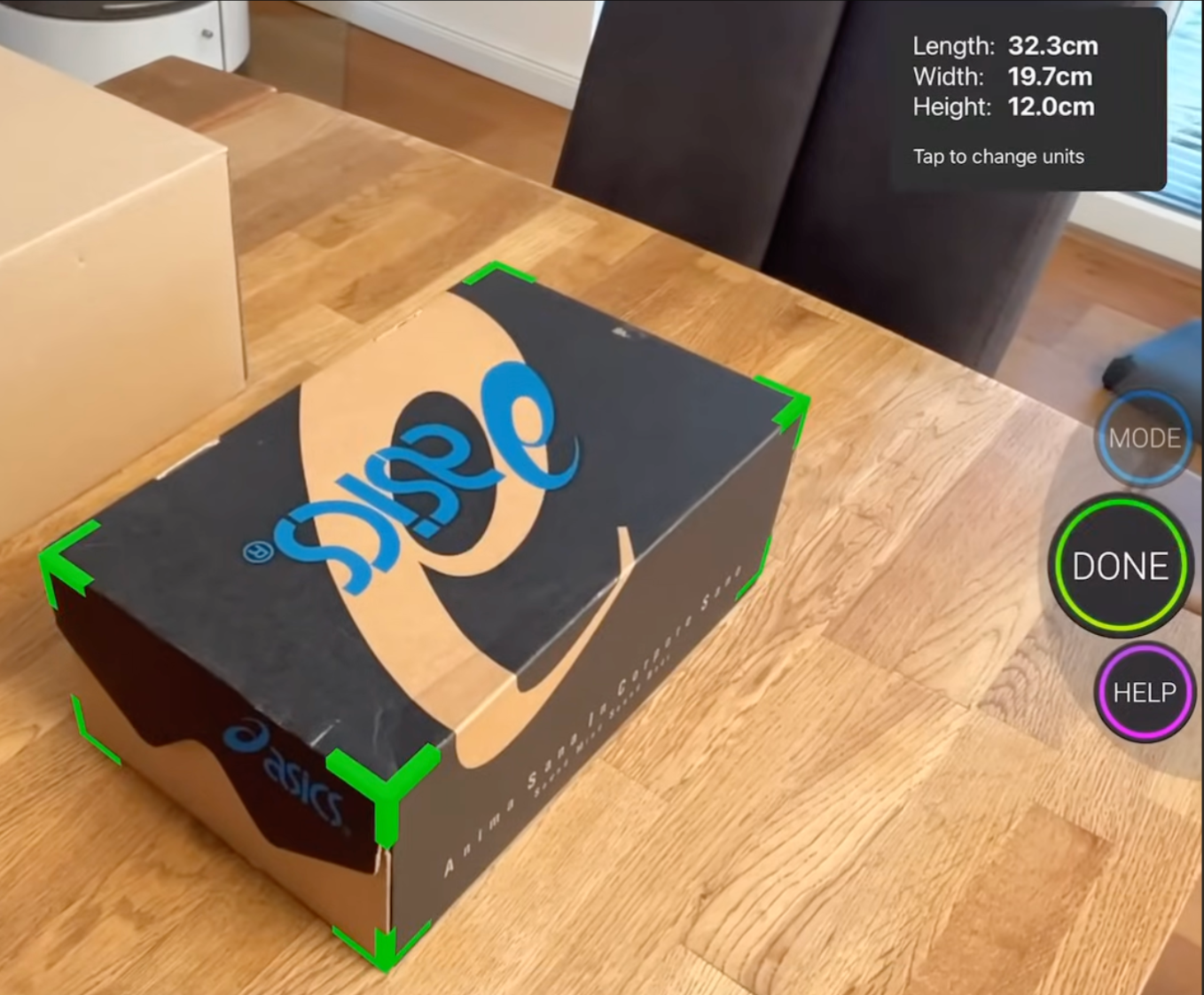
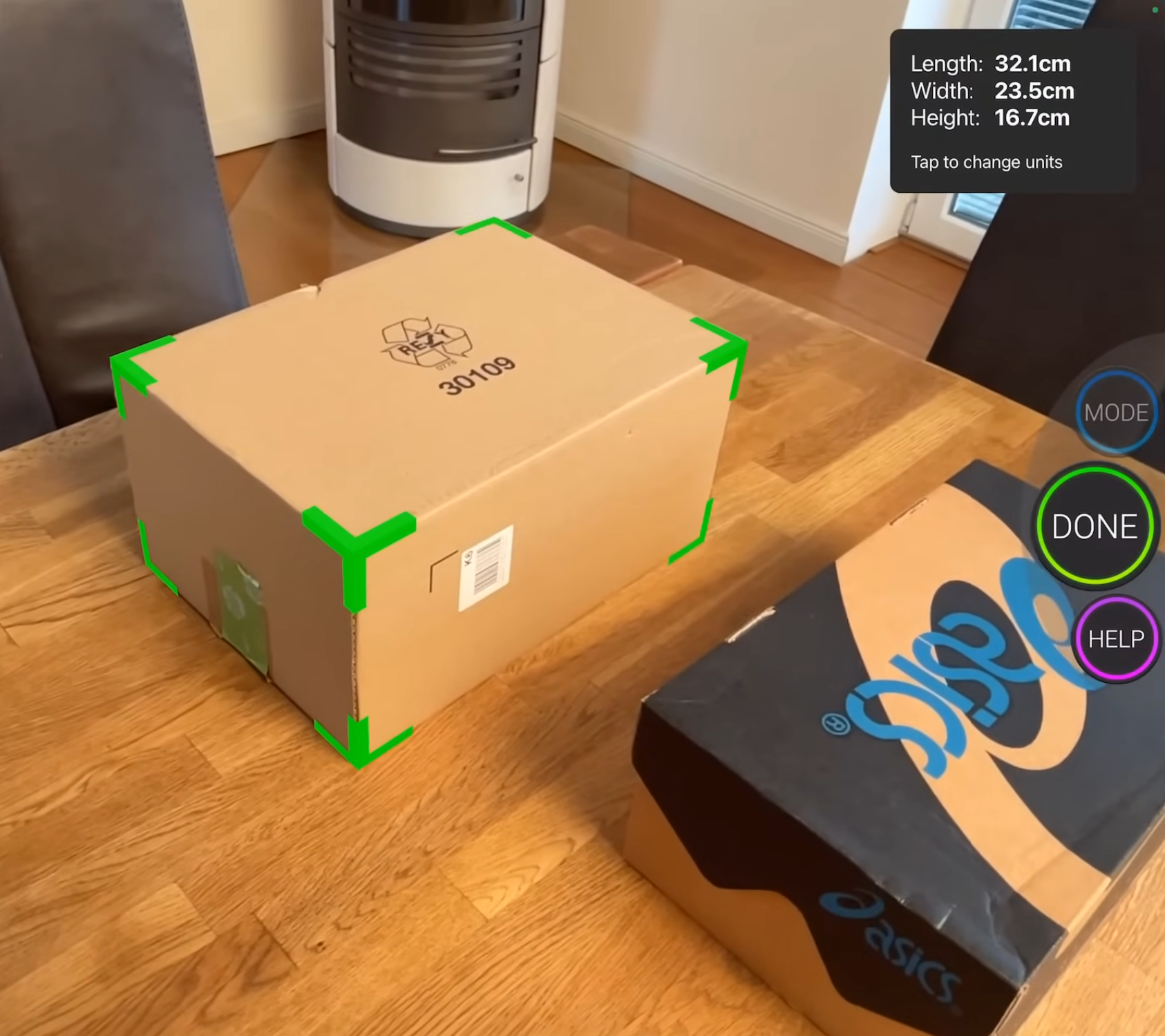
ROONIQ’s Parcel Measure solution uses 3D computer vision technology on LiDAR-powered smartphones and tablets to measure parcel dimensions before shipping. Its use cases include parcel measurement and quality control, positioning mobile 3D scanning as a practical way to capture dimensional data without relying only on fixed scanning infrastructure. The Parcel Measure app listing also describes the same core capability: measuring parcel dimensions before shipping using 3D computer vision on a LiDAR-powered device.
Accurate measurement is crucial for warehouses, fulfillment centers, parcel networks, and quality control and delivery teams. Teams can measure parcels at key stages, during intake, before shipping, and during quality checks, providing greater operational control. Mobile scanning offers greater flexibility by enabling measurements without relying on fixed hardware.
This is especially relevant for distributed operations. A company may have several warehouses, temporary overflow sites, partner-operated locations, or multiple points where parcel data needs to be verified. Smartphone-based scanning can make accurate measurement easier to deploy across these environments.
The result is trusted data captured earlier, closer to the parcel, and with less dependence on manual interpretation.
Connecting Parcel Data to Business Workflows
Accurate dimensional data becomes far more powerful when it flows into the systems that logistics companies use to make decisions. This is where our ElifTech team complements ROONIQ.
ElifTech provides custom software development and AI-driven digital solutions for logistics and supply chain businesses, with logistics services covering transportation management, delivery optimization, inventory management, billing and invoicing, data analytics, reporting, BI, EDI, third-party integrations, and legacy system modernization. We also have strong expertise in AI development, focusing on workflow automation, real-time decision-making, operational visibility, and structured data processing across logistics and supply chain processes.
In the parcel-dimensions domain, ElifTech plays a crucial role in connecting accurate measurement outputs to the logistics technology stack. This includes:
- Establishing APIs between ROONIQ and a Warehouse Management System (WMS)
- Facilitating data flows into a Transportation Management System (TMS) for shipping cost calculations and capacity planning
- Implementing automated billing rules within invoicing systems
- Ensuring ERP synchronization and creating exception dashboards, customer portals, and business intelligence (BI) reports that highlight the financial and operational impacts of dimensional accuracy.
This integration layer is essential because logistics teams derive value not from isolated data, but from data that improves their workflows.
For instance, if the measured dimensions of a parcel exceed the dimensions declared by the customer, the system can automatically flag this as an exception before shipment. If the dimensional weight impacts the billing amount, the invoicing workflow can adjust the chargeable weight calculation accordingly. Furthermore, if a specific customer consistently submits inaccurate parcel dimensions, reporting tools can identify this trend.
This represents a shift from simply measuring dimensions to using that data for intelligent decision-making.
Operational value beyond billing accuracy
The value of accurate parcel dimensions doesn’t stop at invoicing. Once dimensional data is captured correctly and connected to operational systems, it starts improving the way the whole parcel flow works.
For warehouse teams, this means faster intake and dispatch workflows. Parcels can be measured, verified, and processed with less manual intervention, reducing the need for repeated checks or re-measurements. Instead of slowing down operations to manually confirm dimensions, teams can move parcels through the workflow with greater confidence.
Accurate dimensions also improve throughput across warehouse operations. When parcel size data is reliable, teams can plan storage, staging, sorting, and loading more efficiently. This helps avoid unnecessary handling, reduces blockers, and supports better use of available warehouse space.
For transportation teams, dimensional accuracy improves trailer, storage, and load planning. If the system understands the real volume of each parcel, it becomes easier to plan capacity and reduce wasted space. This creates stronger transport cost control and helps teams make better decisions before the shipment reaches the dispatch stage.
Clean dimensional data also improves analytics and reporting. When the source data is accurate, logistics leaders can trust reports on parcel density, capacity utilization, shipping costs, customer profitability, and operational performance. This creates a stronger foundation for forecasting, automation, and strategic decision-making.
Most importantly, accurate and connected dimensional data reduces avoidable exceptions. Teams spend less time investigating incorrect charges, resolving shipment discrepancies, correcting invoices, or manually validating parcel information. Downstream automation also becomes more reliable because systems are working with data they can trust.
Measurement accuracy is only the beginning
The future of parcel operations goes beyond just improving measurement; it focuses on ensuring that measurement data is trusted, connected, and operationally useful.
Parcel dimensions play a crucial role in revenue generation, cost control, space utilization, customer confidence, and planning quality. Inaccurate data can disrupt the entire logistics chain, affecting multiple components.
ROONIQ offers precise measurements at the point of capture through smartphone-based 3D parcel measurement. ElifTech provides software integration and workflow intelligence that transforms this accuracy into real business value.
This presents a significant opportunity for logistics companies: not only to achieve better parcel measurements but also to make informed decisions based on trustworthy data.
